Hannah’s last day of life
Thirteen Reasons WhyHannah’s last day of life unfolds in the gap between an ordinary school day and a decision she has already made. Hannah plans to mail her tapes, attend school late, and see Clay one last time without telling him that it is their final day together. Looking back, she connects that concealed timetable to earlier signs of distress: a written disclosure about suicide, a classroom discussion that never truly began, and the bicycle she gave away. The day’s quiet, planned routine makes the missed signals more consequential, not less.
A plan hidden inside an ordinary day
Hannah has decided to die, though she has not settled the practical details. She identifies pills as the method, then admits uncertainty about what kind or how many; what she does know is her timetable: tomorrow. The distinction is stark. The means remain unresolved, but the decision and its nearness have taken shape.
Her imagined schedule gives the day a precise outward form. She will get dressed, walk to the post office, and mail a number of tapes to Justin Foley. After that, she believes, there will be no turning back. She will go to school late, missing first period, and spend one last day with the others while knowing it is the last. The routine of mailing and attending school sits beside the finality she assigns to it; for everyone else, the day is not marked in the same way.
The last encounter with Clay
Hannah wonders whether she will be able to remember the last time she sees Clay, and recalls that he will not know it is their final day together. She remembers smiling whenever she saw him after the party, while he did not look up. In her account, his attention is elsewhere, and she believes he cannot return the smile without jeopardizing his resolve to go through with what he has decided. The scene is narrated from Hannah’s perspective: the outward gesture is a smile, but its meaning is divided between the two people who share it.
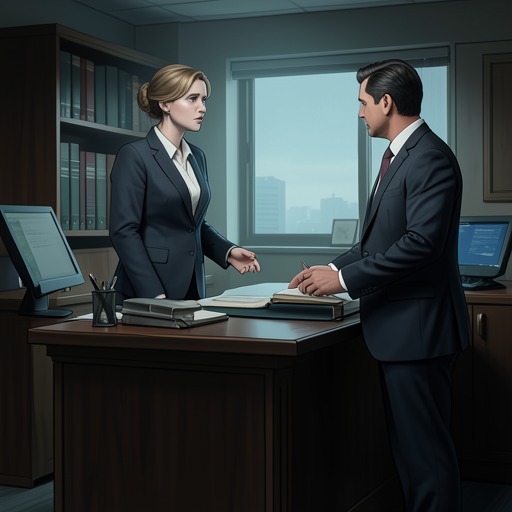
Her memory first falters over the last words they exchanged, then returns to a specific school encounter. In Mr. Porter’s English class, she notices that Clay’s desk is empty; after the bell, she finds him in the hallway. They almost collide, and both say, “I’m sorry.” Clay’s eyes are down, so he does not recognize her at first. When he looks up, Hannah sees sadness or pain in his eyes. She notices his attempt to push his hair away from his face and his dark-blue fingernails as he moves down the hall. She remains among the people bumping into her, watching him go. A commonplace apology becomes, in retrospect, the last exchange she remembers with him.
Warnings before the final day
The final day is made more troubling by evidence that Hannah had tried to make her thoughts legible before her death. In Mrs. Bradley’s class, students could leave notes about the teacher or recommend subjects for discussion; Mrs. Bradley encouraged the written feedback, and a paper bag for notes hung on the spinning bookrack with the students’ bags. Hannah used that channel to write a note about suicide. She drafted it repeatedly, throwing away and crumpling earlier versions before delivering it. The effort to state the thought plainly was itself a struggle, but the note did reach the classroom.
The response did not become the discussion Hannah had hoped the subject might prompt. Mrs. Bradley had previously received suggestions for discussions of abortion, family violence, and cheating, without demanding to know who submitted them. Suicide was treated differently: the class was pressed for specifics, and the discussion stalled. Mrs. Bradley instead spent about ten minutes giving local statistics and explaining that deaths by suicide among juveniles might not be reported if they occurred outside public view; families might describe or be led to believe a death was accidental. She connected that silence to a broader consequence: people in the community might not know what others were experiencing. Hannah cannot tell whether the class’s demand for specifics came from genuine concern, nosiness, or both. What remains clear is that a thorough discussion did not begin.
Another warning appears in retrospect in the bicycle Hannah gives Tony. She tells him she is done with it and offers no reason when he asks. Tony later recognizes the gesture as a sign he missed. Hannah had said that he was the only person she could think of who might need it, explaining that his was the oldest car at school and the bicycle could serve as a backup if it broke down. The gift has a practical explanation, but the unexplained decision to give it away acquires a second meaning after her death.
Retrospective meaning
Hannah’s narration places the coming day inside a chain of earlier signs rather than presenting it as an isolated endpoint. A note composed and discarded dozens of times, a class discussion that never opened into sustained attention, and a bicycle given away without a reason all acquire weight beside her explicit plan. The details do not make the day’s outcome inevitable or reduce it to one cause; they show how attempts to communicate and gestures of farewell can remain ambiguous to the people around them.
The contrast between Hannah’s knowledge and Clay’s is especially sharp. She anticipates that he will treat her as he always has, unaware that this is their last day together, and later recalls their mutual apology as they pass in the hallway. Her account preserves what he could not know in the moment: the finality she had privately attached to an ordinary encounter. In this way, the last day is both a planned sequence of actions and a retrospective measure of what others noticed, what they did not understand, and what could not be asked again.